Walk
A walk chosen for shade rather than for anything at the end of it
In June the only question that matters about a route here is whether it is under trees, and the answer changes street by street for reasons that are a hundred and fifty years old.
Somewhere around forty per cent of this city is under tree canopy, which is high for anywhere with this much asphalt. It is also unevenly spread, deliberately maintained and older than almost anything else on the ground.
This walk goes looking for it, which in practice means going looking for the streets that were planted early and never widened.
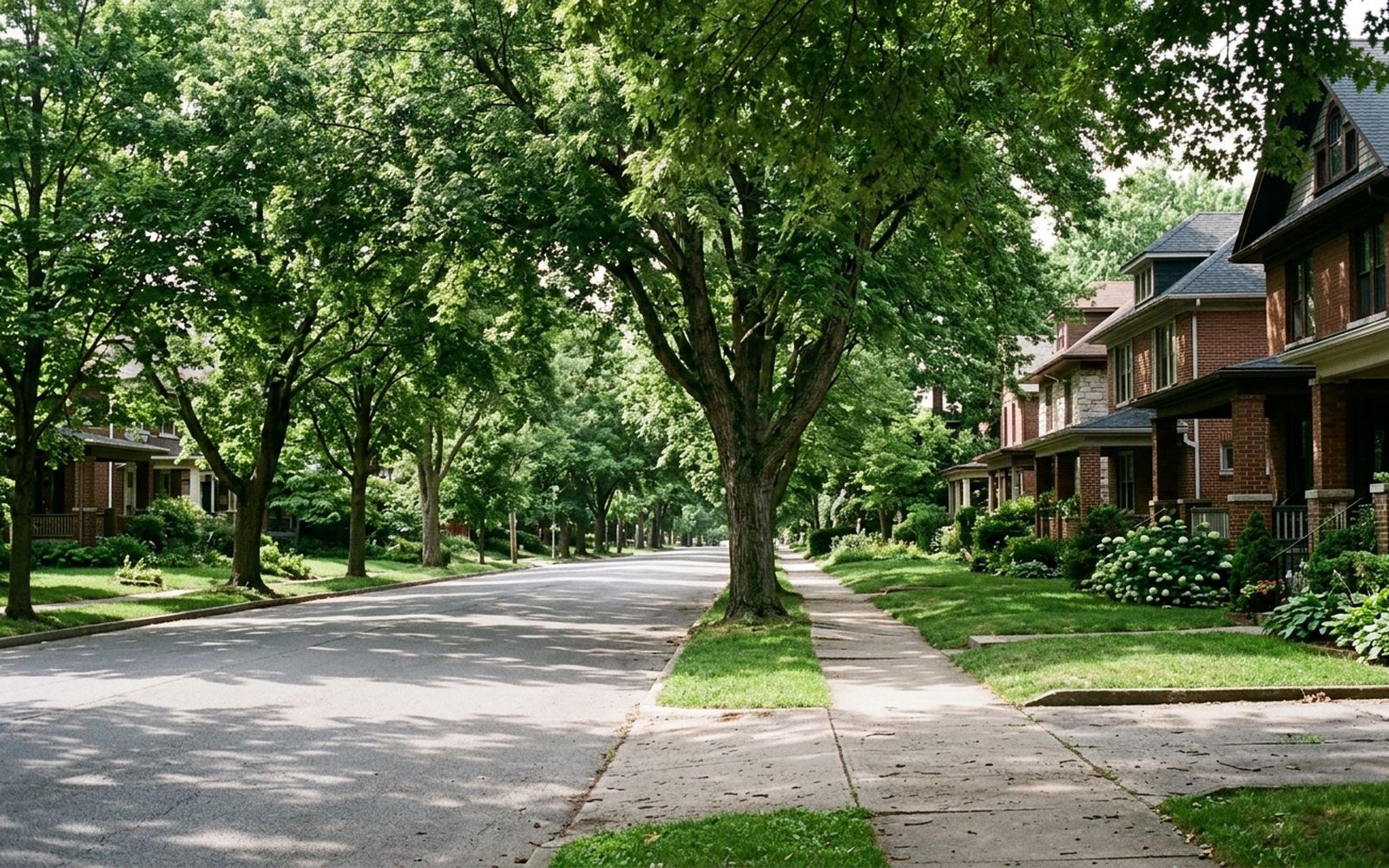
The route
A three and a half mile zig zag between avenues, choosing the shaded side at every junction. Two hours, deliberately slow, on the first genuinely hot day of the year.
The route is not the point on this one. The method is: take the shade, and see where the shade takes you.
Why the avenues win
The city plan gave it two street systems on top of each other: a grid, and a set of diagonal avenues cutting across it. The avenues are wider, they were treated as ornamental from the start, and they got the big planting.
So the avenues have double rows of large trees at generous spacing, and the grid streets have single rows of whatever fitted. On a hot afternoon that difference is worth about eight degrees.
Reading a block by its trees
- All one species, all one size: planted at once, probably when the block was built, and therefore all ageing at once.
- Mixed species, mixed sizes: replanted over decades, which is healthier and looks scruffier.
- A gap with a stump ground flat: a recent loss. Look at the pavement for the root cuts.
- A young tree in a cage: a replacement, and the cage tells you somebody expects it to be hit.
- A big tree with a tarmac collar right up to the trunk: a tree in trouble, whatever it looks like above.
- No trees at all on one side: usually the south side of an east west street, cut for light or for wires.
The species, roughly
Oaks do the heavy lifting on the avenues, with a lot of willow oak in particular, which is the tree responsible for most of the shade in this walk and for the small hard acorns that make October pavements treacherous.
Elms survive in places, and where they do the street feels different because the shape is different: a vase rather than a dome. There are maples on the grid streets, lindens in patches, and one street on this route planted entirely with something that flowers white in April and is a great deal less popular in July.
A city planted for shade is a city that expected people to walk in it. That is the whole argument of these trees, and they have been making it since before anybody built a road here for cars.
Water
The other half of a canopy is what happens under it. Look at the tree pits on any street on this route and you will see three approaches within a hundred yards: bare soil, planted understorey, and a metal grate.
The planted ones look best and hold water longest. The grates were the fashion for a while and are now mostly full of grit. The bare soil compacts to something close to concrete. Which one a block got depends almost entirely on the decade it was last resurfaced.
The surface, honestly
Pavement and brick throughout, lifted by roots in a great many places. This is the walk in the journal with the most uneven footing per mile, which is a direct consequence of it being the one with the most trees.
Flat, with one shallow rise. No stairs. Benches are rare on the avenues and common in the small parks the route crosses, which is a reason to take the route in that order.
When to do it
Between mid May and mid September, in the afternoon, on the hottest day you are willing to go out on. In winter this route is the same walk with the argument removed, and it becomes a walk about brickwork instead.